Designing a fast reactor on paper is one thing.
Starting one up, operating it, maintaining it, refueling it and engineering the systems around it is another.
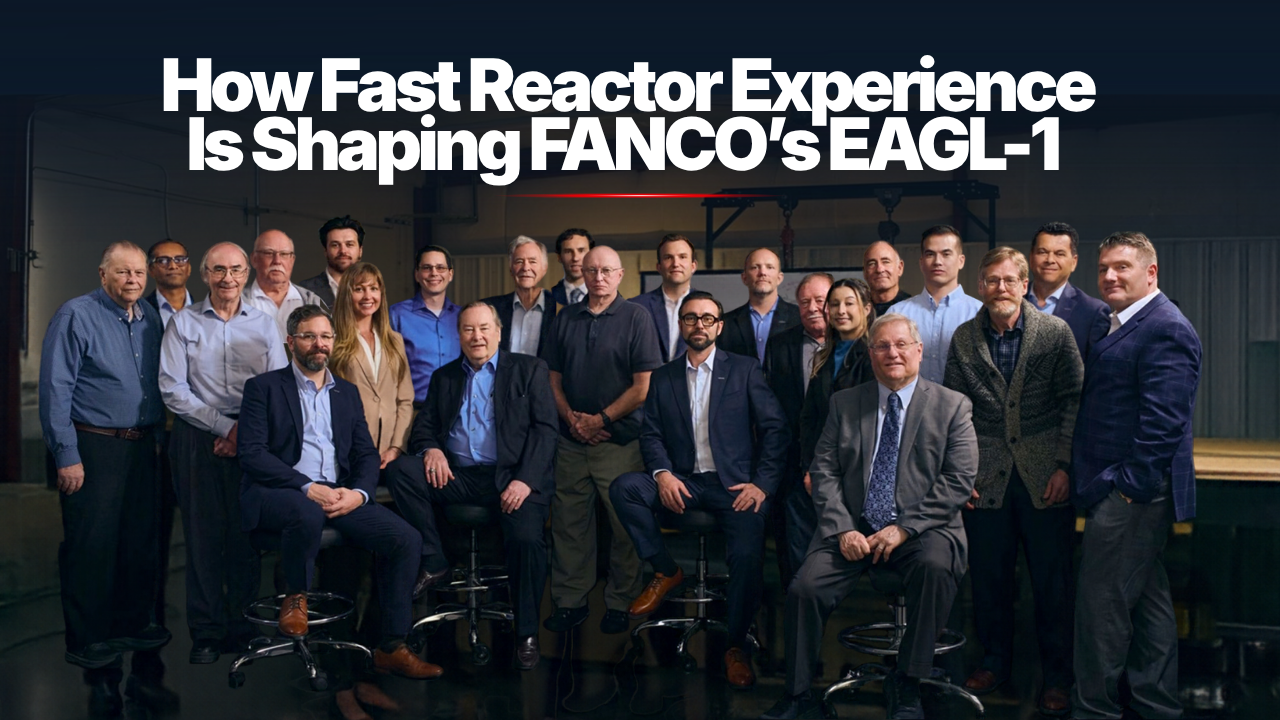
That distinction matters at First American Nuclear (FANCO), where members of the team bring decades of experience across commercial nuclear power, advanced reactor programs, engineering, operations, fuel handling and safety authorization.
That experience includes work connected to the Fast Flux Test Facility (FFTF), a sodium-cooled fast reactor at the Hanford Site in Washington and one of the most significant fast-reactor facilities operated in the United States.
Members of FANCO’s engineering team bring backgrounds in FFTF operations, fuel handling and plant systems, while others have contributed to technical studies and evaluations involving the facility.
But FFTF represents only part of the team’s experience.
FANCO’s senior staff averages more than 40 years of power engineering project and facility operations experience. Across the broader team, that experience spans liquid-metal reactor systems, reactor physics, nuclear fuels, thermal-hydraulics, licensing, plant operations, supply chain, project execution and commercial nuclear deployment.
That range matters because developing an advanced reactor requires more than designing a reactor core.
From Fast Reactor Experience to EAGL-1
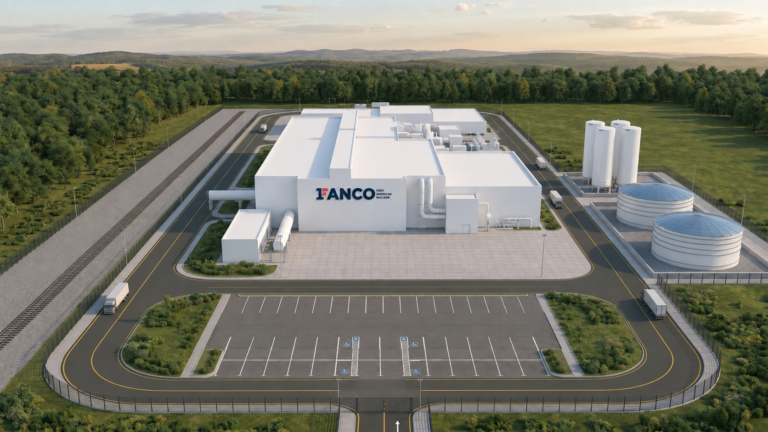
Today, FANCO is developing EAGL-1, a 240-megawatt electric (MWe) fast-spectrum small modular reactor designed to use lead-bismuth coolant.
EAGL-1 is not FFTF.
FFTF was a sodium-cooled research reactor built primarily for testing fuels and materials. EAGL-1 is being developed as a lead-bismuth-cooled reactor for commercial power generation.
The connection is not the reactor design. It is the practical experience carried forward by people who understand what happens when a fast reactor moves beyond engineering drawings and into operation.
Operating a reactor introduces questions that cannot be considered in isolation.
How do individual components perform as part of an integrated plant? How will operators interact with the systems? How will the reactor be maintained and refueled? What happens when real operating conditions differ from assumptions made during design?
FANCO’s team brings experience with liquid-metal heat-transfer and handling systems, reactor operations, fuel handling, safety analysis, licensing and plant engineering. The team has also supported advanced reactor projects involving preliminary plant design, facility layout, operational requirements and commercial deployment.
That experience provides practical context as EAGL-1 moves through development.
Designing With Deployment in Mind
A reactor can perform as intended on paper. Delivering a nuclear power plant in the real world requires much more.
Licensing, manufacturing, construction, supply chain development, financing, operations and project execution all have to work alongside the reactor technology itself.
Decisions made during engineering can affect how a plant is manufactured, constructed, licensed, operated and maintained years later.
That broader perspective is part of FANCO’s approach to EAGL-1.
The company’s engineering history includes advanced reactor plant design and commercialization work, liquid-metal systems, licensing evaluations and studies focused on how nuclear technologies can be built and operated in practice.
EAGL-1 is a different reactor, using a different coolant and being developed for a different commercial objective than FFTF.
But the practical lessons of working with fast reactors do not disappear when the technology changes.
They become part of how the next reactor is engineered.
Technology changes. Experience carries forward.