America’s energy future depends on reliable electricity at an affordable cost. Renewed interest in nuclear energy is creating an opportunity to rethink how that power is designed, built, and delivered.
America’s energy landscape is changing.
Advanced manufacturing is expanding, transportation continues to electrify, and new technologies are changing how businesses operate and communities function. Alongside these developments are the everyday electricity needs of homes, schools, hospitals, and local businesses.
Meeting those needs requires more than additional generating capacity. It requires energy infrastructure that can deliver dependable power at a cost communities and businesses can afford.
Nuclear energy has an important role to play. Realizing its potential, however, means addressing the practical challenges of building and financing new plants.
For First American Nuclear Co. (FANCO), affordability is a foundational design consideration in the development of EAGL-1.
Why Nuclear Energy Is Gaining Renewed Attention
Nuclear power has supplied reliable electricity in the United States for decades. Nuclear plants can operate continuously for extended periods, providing dependable electricity regardless of the time of day or weather conditions.
Nuclear energy also produces no carbon emissions during electricity generation, making it an important component of efforts to expand low-carbon power.
These characteristics make nuclear a valuable part of an electricity system that must serve households, businesses, and industries around the clock.
Meeting the country’s evolving electricity needs will require investment across the energy sector, including generation, transmission, and grid modernization. Nuclear power can contribute dependable generating capacity to that broader system.
This renewed interest is helping drive what many across the industry describe as America’s nuclear renaissance. Its success will depend on how effectively the industry translates that interest into practical, economically viable projects.
The Challenge: Making Nuclear Power More Affordable to Build
While nuclear energy offers significant advantages, expanding nuclear generation presents challenges.
Traditional large-scale nuclear power plants require substantial upfront investment, extensive planning, and lengthy construction schedules. These factors can complicate financing and delay the availability of new electricity generation.
Construction costs, financing requirements, and project schedules all influence the economics of a power plant. Addressing them early in the design process is an important part of developing nuclear projects with affordability in mind.
Small modular reactors (SMRs) and other advanced nuclear designs offer opportunities to reconsider reactor construction, plant configuration, and commercial deployment.
Smaller reactor designs, modular construction strategies, and greater standardization are among the approaches developers are pursuing to improve project execution and manage costs. Their effectiveness will depend on successful engineering, regulatory review, construction, and operation.
The opportunity is to bring these considerations together from the beginning, designing a plant with both its technical performance and its commercial deployment in mind.
EAGL-1: Affordability as a Design Priority
At FANCO, affordability is central to the development approach for EAGL-1, a 240 MWe fast-spectrum small modular reactor designed to use lead-bismuth coolant.
That focus extends beyond the reactor itself to the configuration, construction, and operation of the broader power plant.
EAGL-1 is being developed with an emphasis on efficient plant configuration, established engineering knowledge, and opportunities to simplify systems where practical. These priorities are intended to address the complexity, cost, and construction challenges that can affect nuclear projects.
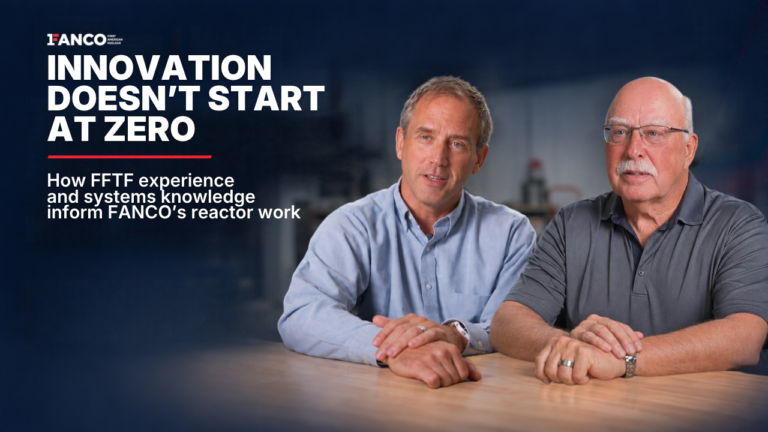
The development draws on the experience of engineers and nuclear industry professionals whose backgrounds span fast reactor operations, liquid-metal technologies, plant systems, reactor physics, and commercial power generation.
Their experience helps inform decisions about how individual systems work and how those systems come together as a complete plant. That perspective is important when evaluating design choices that can influence construction, maintenance, and long-term operation.
FANCO’s objective is to develop a reliable source of electricity with affordability considered throughout the engineering process.
A Practical Approach to Energy Deployment
Developing new nuclear technology is only one part of bringing a power plant into commercial operation. Infrastructure, regulatory processes, construction schedules, and financing must also align.
FANCO’s broader commercialization strategy includes Bridge Power, a phased deployment approach intended to support earlier electricity generation through conventional power systems while preserving infrastructure for future integration with EAGL-1.
The approach is designed to make productive use of power infrastructure as advanced nuclear development progresses. Planning for future integration from the outset also creates opportunities to reuse infrastructure across deployment phases.
By evaluating how conventional power systems can be installed and used ahead of nuclear construction, FANCO aims to connect near-term generating needs with its longer-term nuclear development strategy.
That phased approach reflects the same practical focus guiding EAGL-1: considering how an energy project will be built, financed, and brought into service alongside the technology it will use.
Innovation Built on Experience
America’s nuclear industry has developed a substantial body of engineering and operating knowledge. Applying that experience is an important part of advancing the next generation of reactors.
At FANCO, engineers who have worked with earlier reactor technologies are helping shape EAGL-1’s development. Their backgrounds provide insight into plant systems, operational requirements, and the practical consequences of design decisions.
Combining that knowledge with modern engineering tools and new approaches to deployment supports FANCO’s focus on commercial feasibility.
Progress will also require collaboration among engineers, regulators, manufacturers, utilities, and policymakers. Each has a role in turning a reactor design into an operating power plant that can serve customers reliably and economically.
Powering What’s Next
America’s nuclear renaissance represents an opportunity to reconsider how nuclear energy is developed, financed, constructed, and integrated into the nation’s electricity infrastructure.
Affordability needs to remain central to that effort. For households, electricity costs affect monthly budgets. For businesses and manufacturers, they influence operating expenses and long-term investment decisions.
Through EAGL-1 and its broader commercialization strategy, FANCO is working toward advanced nuclear deployment with those practical needs in mind.
The goal is reliable power, designed with affordability in mind from the start.
Watch: America’s Nuclear Renaissance
Hear why FANCO sees an important opportunity for nuclear energy and how its approach to EAGL-1 brings affordability, engineering experience, and practical deployment considerations into the design process.