Developing advanced nuclear technology is an engineering challenge. Building public understanding around it is a different kind of challenge.
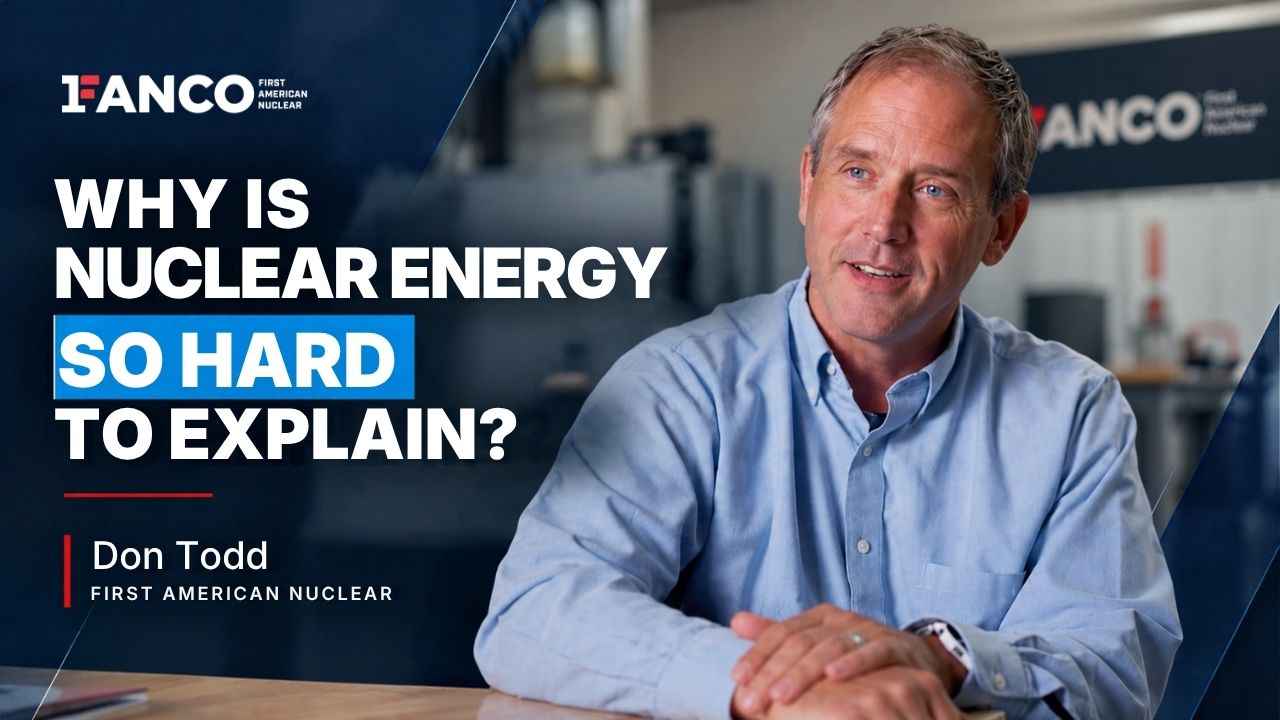
For Don Todd, Ph.D., Vice President of Nuclear Engineering at First American Nuclear (FANCO), the two are closely connected.
Todd has spent nearly three decades working across reactor design, licensing, safety analysis, fast-spectrum reactors and nuclear technology deployment. His career has included leadership at Pacific Northwest National Laboratory (PNNL), work across the commercial nuclear industry and direct involvement in studies and evaluations related to the Fast Flux Test Facility (FFTF).
That experience has given him a perspective not only on how nuclear technology develops, but on the importance of communicating complex technical information clearly.
When Public Perception Shapes Nuclear Energy
Nuclear energy has long existed at the intersection of complex engineering and public perception.
Events such as Three Mile Island in 1979 and Chernobyl in 1986 became defining moments in the public conversation around nuclear energy and nuclear safety.
For engineers working in the field, that created another challenge: explaining highly technical systems, risks and safety principles in ways people outside the industry could understand.
For Todd, that connection between nuclear technology and public understanding has been a recurring theme throughout his career.
His technical experience includes reactor safety analysis, thermal-hydraulics, licensing and fast-reactor technology. His work has also included FFTF-related studies and evaluation efforts, including analysis supporting natural-circulation testing and technical assessments of a potential facility restart.
That technical background reinforces a broader lesson: developing the technology is only part of the work.
People also need the context to understand it.
Making Complex Nuclear Technology Understandable
Advanced reactors introduce technologies and design approaches that may be unfamiliar to people outside the nuclear industry.
Explaining those systems clearly does not mean eliminating complexity. It means providing enough context for people to understand what a technology is, how it is intended to work and why certain engineering decisions are being made.
That becomes increasingly important as advanced nuclear technologies move through design development, regulatory review and, ultimately, toward potential deployment.
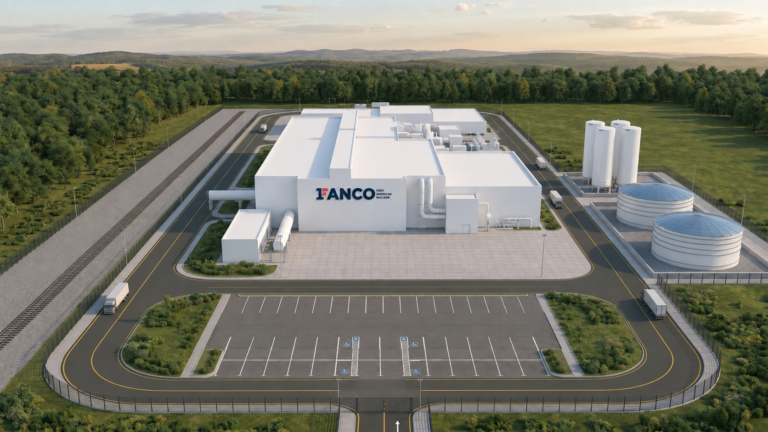
At FANCO, that work includes EAGL-1, a 600-megawatt thermal (MWth) / 240-megawatt electric (MWe) lead-bismuth-cooled, fast-spectrum reactor currently in development. FANCO is focused on maturing the design and advancing its NRC licensing basis.
EAGL-1 is different from the reactors and facilities Todd has worked with throughout his career. But the need for clear communication remains.
Experience Is Part of the Conversation
Nuclear engineers spend years developing the expertise required to understand reactor physics, materials, thermal-hydraulics, safety systems and operations.
The public should not need that same technical background to participate in conversations about nuclear energy.
For the nuclear industry, that means communicating not only what is being developed, but also the context people need to understand the technology, the decisions behind it and where that technology actually stands in the development process.
For FANCO, experience is an important part of that conversation.
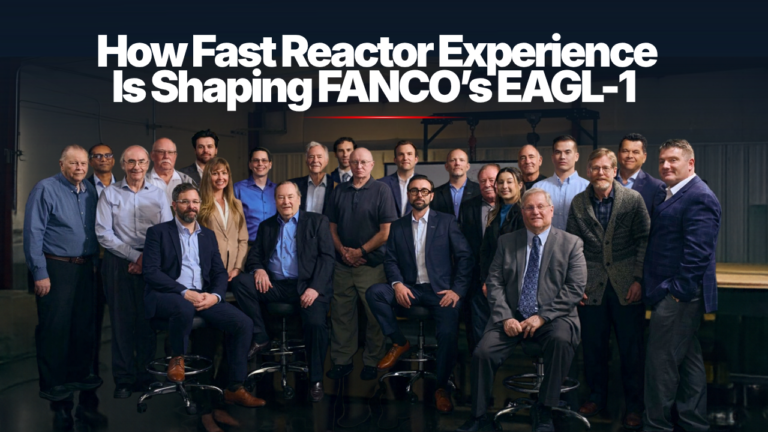
The company’s work on EAGL-1 draws on decades of U.S. Department of Energy research, national laboratory experience and operational heritage from liquid-metal fast reactor programs, including hands-on FFTF experience across members of the FANCO team.
As advanced nuclear technology moves toward deployment, engineering will remain central to that work.
So will communication.