Experience with sodium-cooled fast reactors is informing the development of FANCO’s EAGL-1.
Every nuclear reactor design involves engineering decisions that influence how the plant operates, how its systems are configured, and how efficiently it can generate electricity.
One of those decisions is the selection of reactor coolant.
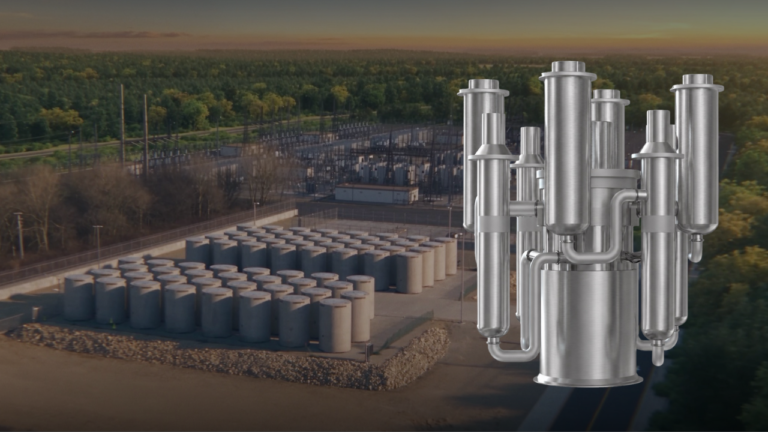
At First American Nuclear Co. (FANCO), experience with liquid-metal reactor technology is helping inform the development of EAGL-1, the company’s 240 MWe fast-spectrum small modular reactor. Unlike earlier sodium-cooled fast reactor designs, EAGL-1 is being developed to use lead-bismuth as its primary coolant.
The decision reflects an effort to apply lessons from established reactor technologies while exploring opportunities to simplify plant design.
Building on Experience with Sodium-Cooled Reactors
Sodium-cooled fast reactors have a long history of research, development, and operation. Their performance has been demonstrated through experimental and power reactor programs, providing an important foundation of technical knowledge for advanced nuclear development.
FANCO’s engineering team includes professionals with firsthand experience in fast reactor operations, plant systems, fuel handling, and liquid-metal technologies, including work associated with the Fast Flux Test Facility (FFTF).
That experience provides insight into more than reactor performance. It also informs how engineers evaluate system complexity, operational requirements, and the practical challenges of integrating reactor components into a functioning power plant.
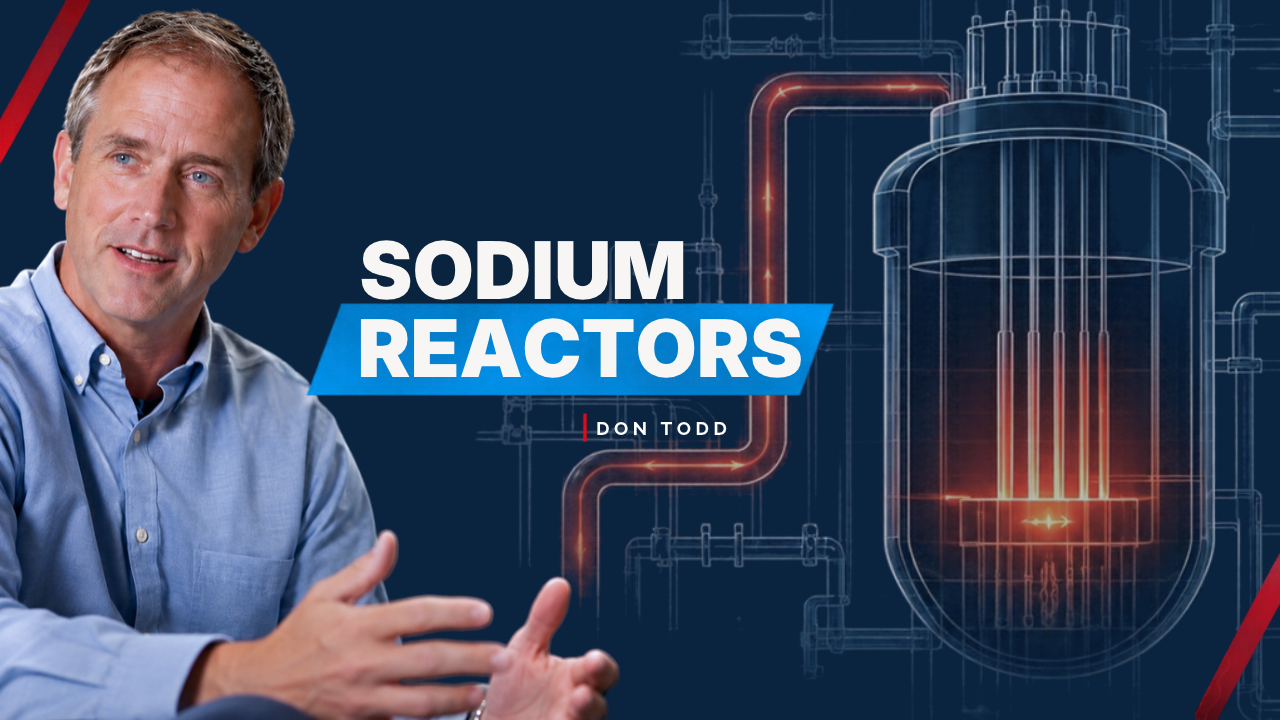
As Dr. Don Todd, FANCO’s Vice President of Nuclear Engineering, explains, sodium-cooled fast reactors are a proven technology. However, their use of sodium also introduces design considerations that must be addressed.
Understanding the Role of Reactor Coolants
A reactor coolant transfers heat generated within the reactor core to systems that can use that thermal energy to produce electricity.
Different coolants have different physical and chemical properties, which influence reactor configuration, operating conditions, and supporting equipment.
Sodium offers favorable heat-transfer characteristics, but it reacts vigorously with water and can burn when exposed to air. Consequently, many sodium-cooled reactor designs incorporate an intermediate heat-transfer loop to separate the radioactive primary coolant from the water and steam systems used for power generation.
While this approach helps manage those interactions, it also introduces additional equipment, components, and interfaces into the overall plant configuration.
For FANCO, evaluating opportunities to reduce that complexity is an important part of EAGL-1’s development.
Why FANCO Selected Lead-Bismuth
EAGL-1 is being designed around a lead-bismuth coolant system.
Unlike sodium, lead-bismuth does not undergo the same vigorous chemical reaction with water. This difference creates opportunities for alternative heat-transfer system configurations and potentially reduces the need for some equipment associated with sodium-cooled designs.
By utilizing lead-bismuth, FANCO is pursuing a reactor configuration intended to simplify the overall plant design.
The objective is not simply to replace one coolant with another. It is to evaluate how coolant selection can influence the broader system, including equipment requirements,