About 10 years ago, a small group of experts in the nuclear field came to a simple realization: America had already built a reactor that laid the groundwork for the future of commercial nuclear energy.
That reactor was the Fast Flux Test Facility (FFTF), the crown jewel of the Department of Energy’s advanced reactor program. It was a liquid metal-cooled fast reactor (LMFR) that ran beautifully and demonstrated every capability the world is pursuing today: passive safety, fuel flexibility, and the ability to close the nuclear fuel cycle.
The FFTF was an invaluable learning tool from a time of ambitious government-funded science projects. Unfortunately, funding priorities changed, and the FFTF program was shut down.
But rather than letting this wealth of knowledge and experience evaporate, we decided to ensure this worthwhile investment delivered a return to the American people. We assembled the team of scientists and engineers who had perfected it.
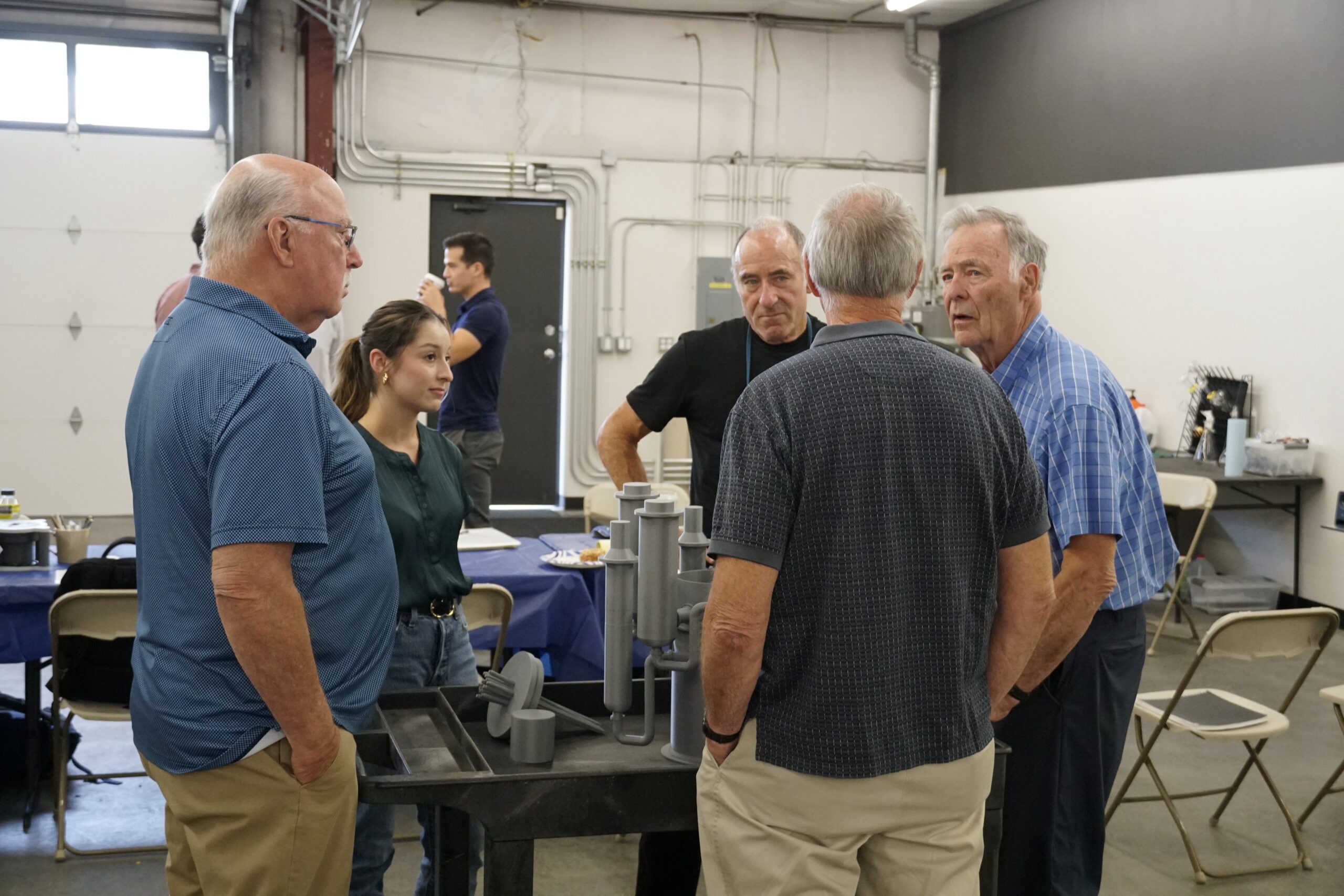
Individuals who logged thousands of hours at every corner of FFTF, who had personally verified the performance of its sodium loops, tested its fuel assemblies, and maintained its incredible safety record; the people who knew these systems inside and out. And we’ve been expanding that team since, with new talent and fresh ideas built upon that experience.
We not only knew the advantages, but the challenges and limitations of these technologies because we either developed them or worked on them.
In the years that followed, we quietly lent our liquid-metal reactor expertise to a number of commercial enterprises and DOE sponsored programs. We were the go-to specialists when others needed to understand the real-world behavior of fast-spectrum reactors, advanced reactors, and liquid metal systems. Through that work and our experience with FFTF, we learned an important lesson: the technologies and concepts were sound, but the economics were not.
That realization is what led to the founding of the EAGL-1 reactor program. A reactor built on the same technical foundation, but with a commercial mission to deliver an advanced fast reactor that could be built at a price the world can afford.
Much of our team has spent their lives inside real fast reactor facilities, with real systems. You either design it right, or it doesn’t run. We knew there was something superior that would completely flip the script on unit economics, timeframes, and overall practicality of delivering nuclear power at scale.
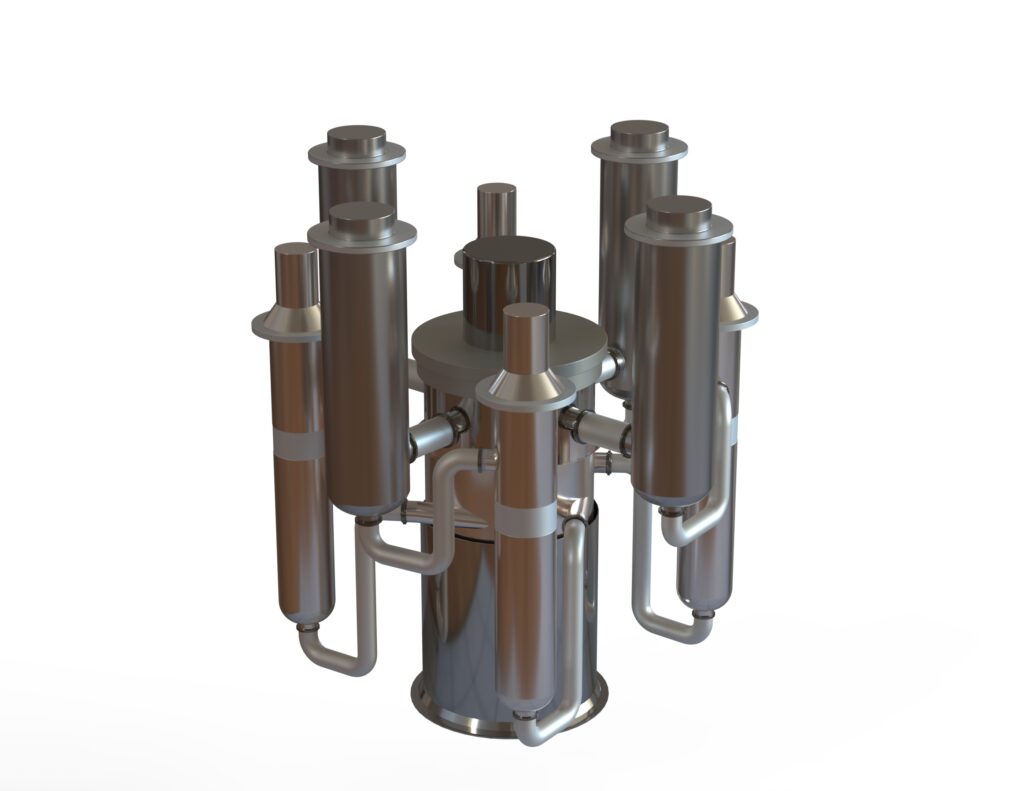
That’s the foundation of EAGL-1, a 240 MWe fast-spectrum liquid metal cooled reactor. It’s the outcome of decades of operating experience and lessons learned from the best reactors America ever built, butrefined, simplified, and made affordable for the next generation of reliable, carbon free power.
Redefining Suitable Power and Price
To make the leap from pitch deck to widespread adoption, a nuclear reactor must meet two criteria:
Powerful
The design must be capable of providing meaningful baseload power for a developed, prosperous economy. While microreactors are useful for niche off grid power needs, they cannot solve the massive terawatt gap our economy now requires, especially with the explosion of hyperscale data centers.
Practical
Widespread adoption of a clean firm power source requires a cost that is in striking distance of traditional fossil fuel sources. Power is largely a commodity, and therefore, price is paramount.
How Other Technologies Miss the Mark
Over the past decade, investment and imagination have poured into the nuclear sector and that’s a good thing. The industry needs new ideas. But too often, attention has centered on innovative ideas instead of the realities of construction, maintenance, and cost.
Our team has seen firsthand where promising concepts run into practical limits. Shrinking legacy light-water designs have not solved the cost problem. Pyrophoric coolants and chemistry heavy systems have inherent risks and complexity. And in many cases, the pursuit of novelty has come at the expense of simplicity, the very quality that makes a plant economical and reliable to operate.
What’s missing isn’t creativity or ambition. It’s experience, the kind that comes from decades of working with advanced reactors and knowing where the real costs lie.
Enter First American Nuclear
I formed this company to build a team and take our design philosophy to a future centered on targeted innovation; we used advanced technology where it genuinely mattered for customer value but stuck with traditional proven methods where innovation did not provide added value.
With all our experience across multiple reactor types and extensive experience working with sodium cooled fast reactors and traditional light water reactors, we chose to utilize the passive safety, fuel flexibility, and fast spectrum of advanced reactors like FFTF and combine it with a Lead Bismuth Eutectic (LBE) coolant.
The Coolant is the Key
The benign nature of LBE eliminates the need for expensive, complicated systems, uniquely enabling us to deliver truly cost effective, scalable power.
Simplified Design and Cost Savings: Because LBE is chemically benign (it doesn’t react violently with air or water), we eliminate the costly and complex dual circuit designs required by sodium cooled reactors and simplify every aspect of operation from maintenance to refueling.
Superior Safety: LBE has an extremely high boiling point of 1670 degrees C. This allows us to safely operate on the principles of physics rather than complex mechanical systems and use a variety of proven high-performance fuels. Put simply, our reactor cannot melt our fuel.
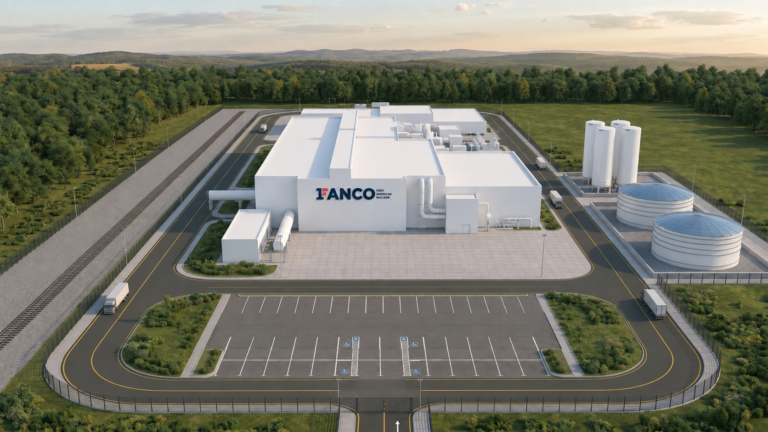
True Modularity: The benign nature of LBE also eliminates pressure-necessitated systems, resulting in far more power in a smaller package without the pressure required in water-based designs. Our reactor is truly factory fabricated using common steels, bolted together, and can be fully tested and inspected in a factory, eliminating unpredictable on-site construction costs.
Maximized Output: Our high-power density design delivers massive baseload power without bundling. With an output of 240 MWe per unit, meeting the demand of a 1 GW hyperscale data center or heavy industrial application might require 30 low output reactor units from competitors, but requires just 4 EAGL-1 units. Fewer units mean dramatically lower regulatory, construction, and startup costs.
Flexible Integration: LBE allowed us to design an isolated nuclear island for the plant, match the outputs of traditional natural gas generation, and seamlessly integrate with catalogue off-the-shelf parts and components. We can get power to grid quickly and work with traditional generation supply chains.
Built on Experience
We didn’t start with the assumption that the government’s past advanced reactor projects had already found the right answers. We questioned them, not from the outside, but from firsthand experience running those systems ourselves.
What we’re building isn’t just another piece of technology. It’s a source of power. Real, dependable, and affordable power. Designed by people who’ve seen how good intentions fail when the physics, economics, or supply chains don’t line up. And others have recognized this, we have been quietly building a new generation of talent to accelerate the experience we’ve earned.
The world’s energy problem isn’t on the horizon anymore; it’s here. Power demand is surging, grids are strained, and the need for energy independence is now a national priority. The centuries of experience held by the First American Nuclear team reached a simple conclusion: the market doesn’t need a science experiment. It needs a reactor that’s cheaper, safer, and faster to deploy.
By pairing the simplicity and stability of lead-bismuth coolant with the hard-earned experience of the people who’ve kept fast reactors running, we designed EAGL-1 a high-power SMR designed for practical deployment, not theoretical debate.
This isn’t an announcement about technology. It’s the start of a solution, one designed to close the growing power gap and reestablish America’s leadership in the energy transition.
The time for incremental progress has passed. We’re inviting utilities, data-center partners, and anyone serious about scaling reliable, clean power to join us in building the future of American energy.
That’s what makes us peerless.
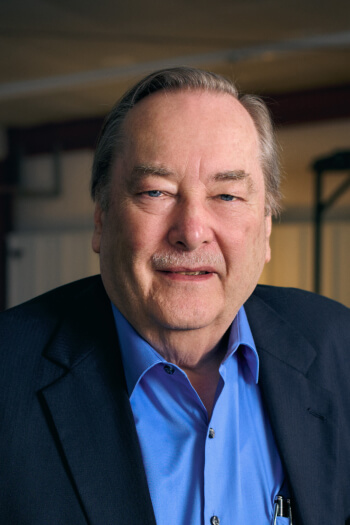
William “Bill” Stokes
President & Founder – First American Nuclear